

How to Survive Traveling with Babies
Traveling with a baby can be a daunting prospect — but with careful planning and a positive mindset, it can also be an incredibly rewarding experience.
From my own personal experience, it wasn't until I changed my expectations that our holidays became more enjoyable all round. Try not to get hung up on the things that go wrong or are different from what you'd imagined.
Your aim is to enjoy new experiences and connect in a new way as a family. Appreciate the fun moments you'll remember for a lifetime, rather than focusing on the short-term difficulties that may crop up.
Whether you're embarking on a road trip, flying across the country, or taking a holiday abroad, this guide will give you valuable tips and strategies to ensure a smoother journey for you and your little one.
Plan Ahead
- Research your destination. Find out about family-friendly accommodations, restaurants, and activities. Look for baby-friendly amenities like changing tables, high chairs, and stroller-friendly paths.
- Create a travel checklist. Make a list of all the essentials your baby will need — nappies, wipes, formula or breast milk, baby food, extra clothing, and any favourite toys or comfort items.
Pack Wisely
- Pack a separate nappy bag. Keep all baby essentials organised in a dedicated bag for easy access during travel.
- Dress comfortably. Choose clothing that's easy to put on and take off for nappy changes. Layers are also helpful to accommodate changing temperatures.
Timing Is Everything
- Plan around their routine. Try to book flights during nap times or overnight to minimise disruptions.
- Allow extra time. Babies require frequent breaks, so build in extra time for feeding, nappy changes, and comforting.
Baby Gear
- Travel light. Invest in lightweight, portable baby gear like a travel porta cot, stroller, and car seat. Consider renting larger items at your destination to save space and hassle.
- Babywear. A baby carrier can be a lifesaver for keeping your hands free while navigating airports or sightseeing.
Feeding on the Go
- If you're breastfeeding, nurse on demand to keep your baby comfortable and hydrated.
- For formula-fed babies, pre-measure powdered formula in separate containers for convenience.
- If your baby has started solids, pack easy-to-carry baby food pouches or containers.
- Offer a feed or dummy on take-off and landing. This helps with the change in pressure on your little one's ears.
Entertainment
- Bring a variety of toys, books, and activities to keep your baby engaged during transit.
- Download baby-friendly apps or videos onto your devices for in-transit entertainment.
- For toddlers, pack plenty of new activities and snacks — novelty keeps them occupied.
Be Prepared for Unexpected Challenges
- Carry a first-aid kit with baby-specific items like baby pain relief and teething gel.
- Have a plan for handling unexpected delays, cancellations, or lost luggage.
Be Considerate
- Apologize in advance to fellow travelers for any potential disruptions and be courteous to airline or hotel staff. Most people understand the challenges of traveling with a baby.
- Use noise-cancelling headphones for your baby if you're concerned about loud noises during transit.
Stay Flexible and Patient
- Traveling with a baby can be unpredictable. Stay flexible and adjust your plans as needed.
- Remember that the journey is an adventure for your baby too — their reactions can be part of the fun.
Squeeze in Naps
Aim to get naps in where you can. If that means it's in the pram, the car, or even in the carrier, it's better to have a cat nap than no nap at all — otherwise you'll end up with an overtired baby, which leads to restless nights and early mornings.
Routine and Bedtime
- Maintain your usual rhythm. Keep meals, naps, and bedtimes consistent. If your baby's bedtime ritual at home includes a bath, story, and a bottle, aim to do the same on holidays.
- Keep the sleep environment dark. This eliminates early rising and helps your baby link sleep cycles.
- Use motion to your advantage. If bedtime or night wakings become a challenge, you can use the pram to get your little one off to sleep. Once asleep, transfer them into their sleep space.
Jet Lag
- Aim to get onto your new time zone as quickly as possible.
- To help yours and your baby's body clock adjust, get plenty of daylight exposure — particularly at first light (around 6am).
- Stick to your baby's normal wake windows and encourage their normal napping schedule (don't let them over-nap).
- Once back home, allow at least 1 week for your baby to adjust to their home time zone again.
Enjoy the Experience
Embrace the opportunity to create lasting memories with your little one. Travelling with a baby may have its challenges, but it also offers unique joys and experiences you'll cherish forever.
Additional Tips
Stay on Home Time for Short Trips
If you're traveling abroad for less than one week, my advice is to continue your routines based on your home time zone. If you're traveling for longer than a week, then I suggest amending your timings.
From my own personal experience, anything less than seven days isn't worth the change — by the time you get your child on track, it's time to come home.
Practice the Porta Cot Before You Leave
If you're planning on being away longer than a week, practice sleeping your little one in the porta/travel cot approximately one week before you intend to travel. Set up the porta cot in your baby's bedroom and practice sleeping your child in it — this allows them to become comfortable in a familiar environment first.
If your child wakes up, put them back in the cot, and each night try to extend the duration in the porta cot.
Replicate Your Home Sleep Environment
Bring along your cot sheets and favorite blanket. The new environment will then feel and smell like home — babies and toddlers rely heavily on their sense of smell, so familiar bedding makes a huge difference.
Introduce a Comforter Before the Trip
Consider introducing a comforter before your trip for added comfort in a foreign place.
Adjust Gradually for Small Time Zone Differences
For time zones that differ by only a couple of hours from home, you can slowly adjust by shifting nap times, mealtimes, and bedtimes forward or backward by 15–30 minutes per day over a few days before you leave.
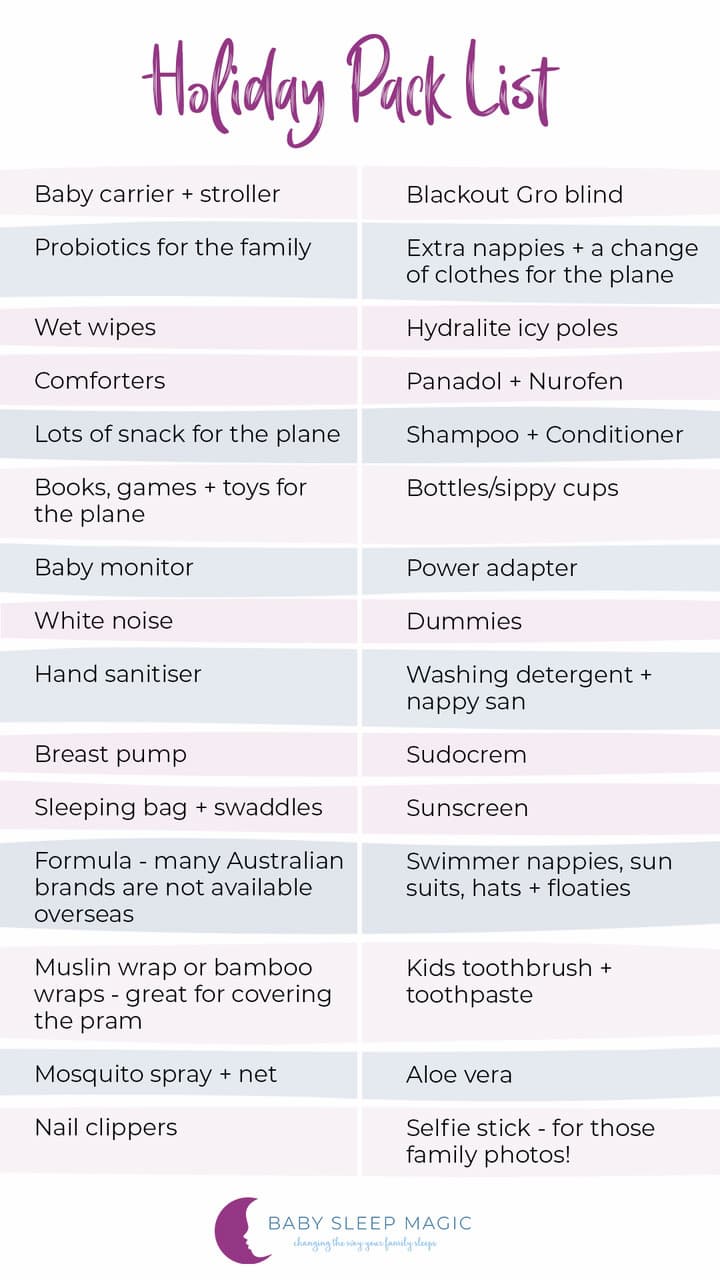
Surviving and thriving while traveling with a baby comes down to preparation, flexibility, and a positive attitude. By planning ahead, packing wisely, and being patient, you can ensure a smoother and more enjoyable journey for both you and your baby. So go ahead and embark on that family adventure — the world is waiting to be explored with your little one by your side.
And remember — what happens on holidays stays on holidays. Sometimes you have to go into survival mode. Maybe you co-slept, maybe naps happened in the carrier — this doesn't mean you have to continue doing so when you return home. Within a couple of nights of being back, your little sleeper will be back on track.
